Part II — From Online to Intelligent: Tracing the Next Super‑Cycle

The Long Arc of “Getting Online” (1995–2025)
Twenty-nine years ago during the dot com boom, barely 1 in 40 people alive today had ever typed a URL. Since then things have changed quite a bit. The population of the internet has more than doubled in the last decade thanks to the rise of smartphones, from just 2.5B people in the early 2010’s.
Today, roughly 6.04 Billion people (73.2% of the 8.2B people alive) connect to the internet. It’s is no wonder why the internet feels like such a different place.
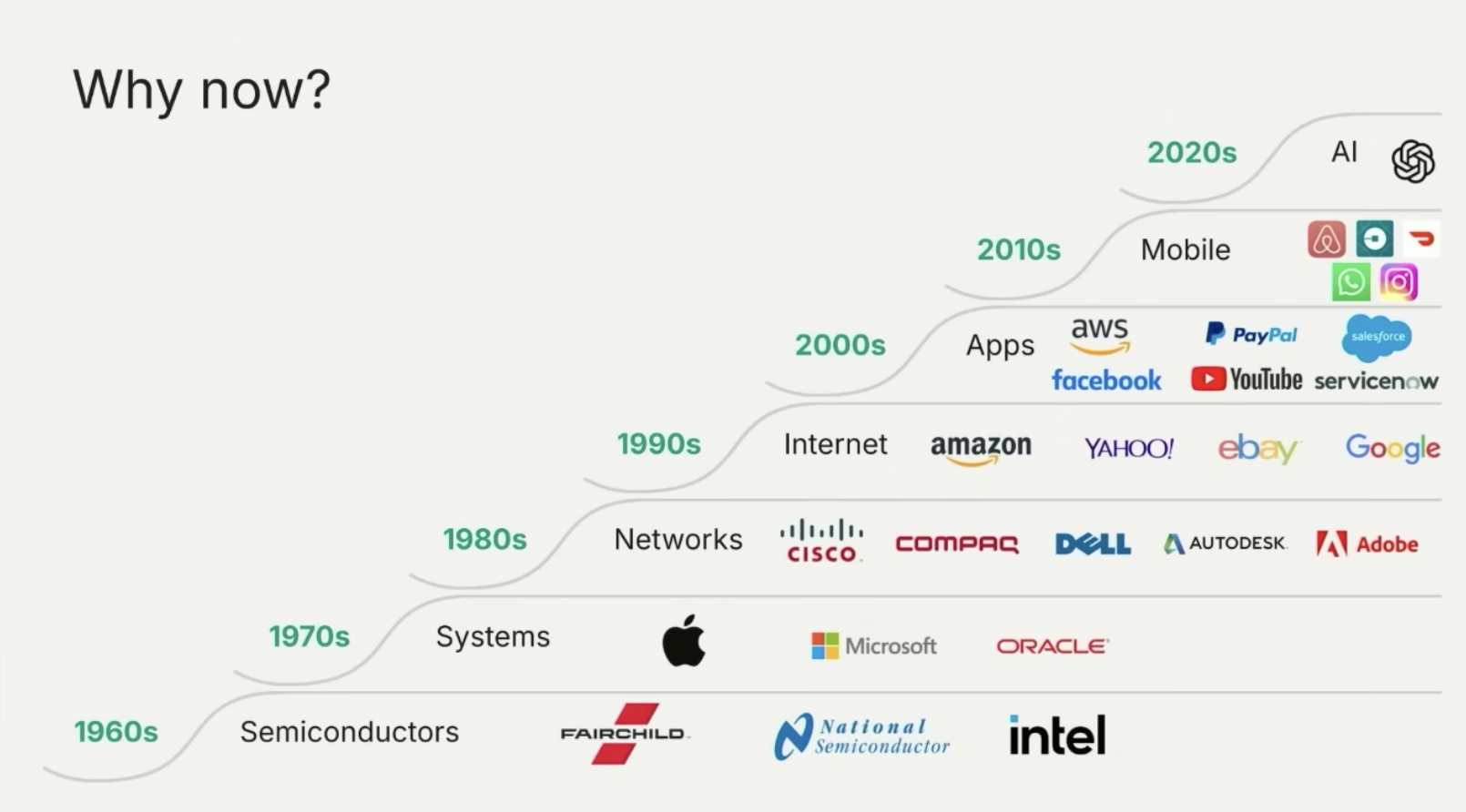
The New Baseline: "Intelligence”
After spending the last two decades watching the internet grow, it got me thinking. Can we do the same thing for the rise of artificial intelligence. Can we track the percent of people using A.I. currently and monitor the growth of it over time. So I started to pull some data.
Generative AI compressed the first decade of internet adoption into approximately two years:
1.8 billion people (21% of global population) have consciously used an AI tool in the past six months.
If AI’s adoption curve mirrors the internet’s, we’re roughly at 2007; when only ~21% of people were online, before climbing to ~73% today.
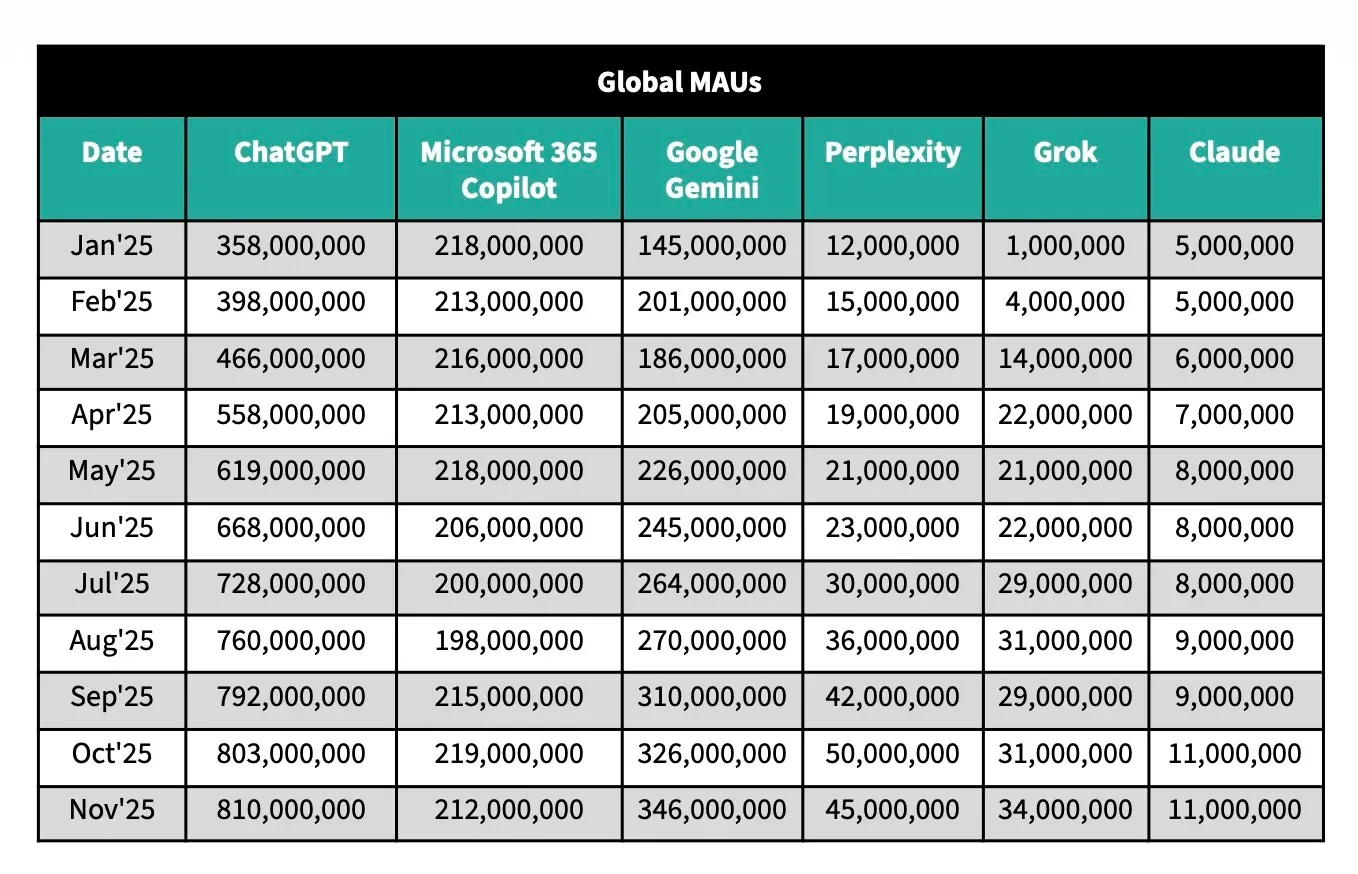
ChatGPT alone boasts nearly 800 million monthly active users, with Google Gemini also claiming 350M monthly active users.
500–600 million people (6–7%) use AI daily.
Mapping the Next Decade: 2025 to 2035
If we focus on the connected world, AI already looks mainstream. The remaining climb is about the next few billion online people coming onto AI enabled devices, and about turning AI from a tool you try into invisible default infrastructure you rely on everyday.
Jeff Bezos electricity metaphor from 2007, a foundational, horizontal technology quietly embedding itself into every aspect of life and fading into the background like the electricity in our walls; is quickly becoming a reality.
If the next decade mirrors the internet arc, it is actually still early days. With AI adoption approaching today’s internet penetration by 2035. A plausible path looks like 2.5 billion users by 2027, 3.7 billion by 2029, 4.9 billion by 2031, and roughly 6 billion by 2035, which would be about 68% of the global population. Although, I would imagine this actually goes much faster due to the foundation the internet provides.
Why AI’s Adoption Curve Will Steepen:
Invisible Integration: AI will become deeply embedded in everyday applications—search, email, CRM, and smart speakers—requiring no special effort from users.
Cost Collapse: AI inference costs have already fallen dramatically and will continue dropping, democratizing access and enabling broader adoption.
Skeptic Conversion: Analysts expect more than half of today's generative AI skeptics to become regular users within the next few years.
Emergent Ubiquity: Nearly every device, from smartphones to cars, will soon ship with built-in AI capabilities.
The Early Innings of AI
Jason Shuman of Primary Venture Partners predicts that even the fastest growing vertical AI companies have barely scratched the surface of their markets. His simple math:
A vertical AI company that reaches $5M ARR quickly, with a $60K ACV, only needs about 83 customers. In a market with 100,000 qualified targets, that is about 0.08% penetration.
Across three common scenarios he modeled, the penetration remains tiny. In a $2B TAM with 33K target accounts, $5M ARR is about 0.25% penetration. In a $10B TAM with 166K accounts, it is about 0.05%. In a $30B plus TAM with 500K accounts, it is about 0.017%.
“The best products own data and orchestrate high impact daily workflows, and the wedge is often brutally simple: we sell you revenue.”
In one of my favorite talks of 2025, Sequoia predicts that with AI models ability to reason, they unlock a trillion dollar services market on top of SaaS (software as a service).
Conclusion: Your Future Inbox
By 2030, using software without AI assistance will feel outdated, akin to using a phone without a camera or app store today.
The intelligence wave isn't merely another tech trend. it's a fundamental change to humanity’s cognitive infrastructure.
The next super-cycle is already underway.